HOW YOU MEASURE

How you
measure.

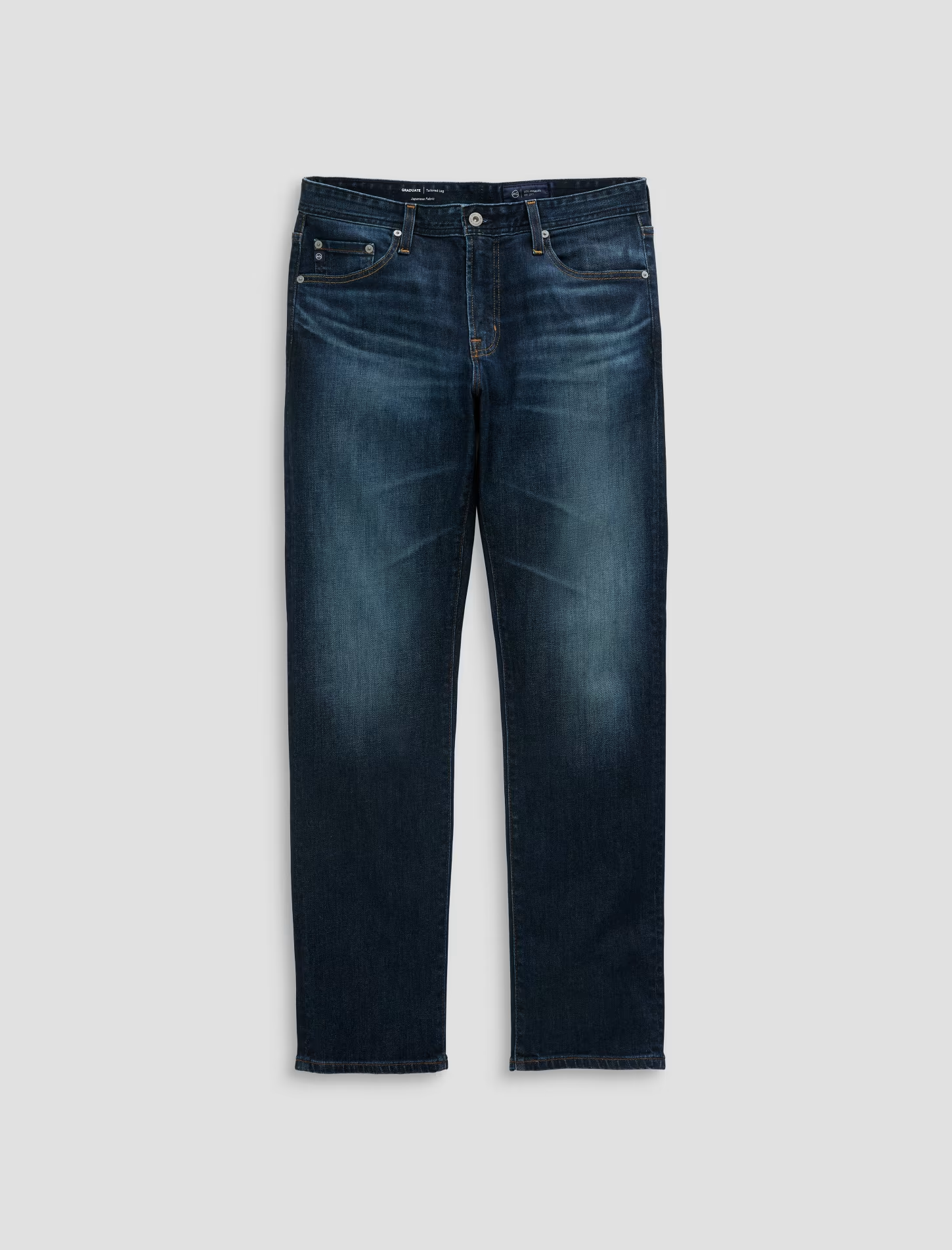
Grab your favorite pair of pants and lay them flat. Measure from the garment - no tape around your body needed.

Flat-lay pants measurement diagram
STEP 01 OF 09
Circumference · double it

Waist

Lay your pants flat on a hard surface. Measure straight across the waistband from edge to edge. Double that number.

Fold the pants in half first so the front and back sit evenly - this keeps the waistband from twisting as you measure.

inches
Length · no doubling

Front rise

With the pants face up, place your tape at the crotch seam - where the fly ends and the two inseams meet - and run it straight up the center front to the top of the waistband.

This controls where the pants sit and how much room you have through the front. Most pants measure 9–12 inches here.

inches
Length · no doubling

Back rise

Flip the pants over. Starting from the same crotch seam point, run your tape straight up the center back to the top of the waistband.

Back rise is almost always 2–4 inches longer than front rise. This is what determines seat comfort and whether pants pull down when you sit.

inches
Circumference · double it

Seat

With the pants flat, find the widest point - usually about 7–9 inches below the waistband where the back pockets sit. Measure across. Double it.

Don't measure at the thigh by mistake. You want the broadest part of the hip, not where the legs begin to narrow.

inches
Circumference · double it

Thigh

Measure across one leg at the very top, right below where the two inseams meet. Double it.

Keep the fabric flat and smooth. You're measuring one layer of a single leg, so doubling gives the full circumference.

inches
Length · no doubling

Inseam

Run your tape from the crotch seam - where the two inseams meet at the bottom of the fly - straight down the inner leg to the hem.

This is a single straight length. No doubling. For raw or unsanforized denim, account for shrinkage if you haven't washed it yet.

inches
Length · no doubling

Outseam

Measure from the very top of the waistband down the outside edge of one leg all the way to the hem. This runs the full length of the outer seam.

Outseam is always longer than inseam. The difference between them roughly equals your rise - cross-referencing the two lets a tailor verify your numbers instantly.

inches
Circumference · double it

Knee

Measure across one leg at the midpoint between the crotch seam and the hem - roughly where your knee lands when wearing. Double it.

If the pants have a crease, seam, or reinforced knee area, use that as your guide. Otherwise just eyeball the midpoint.

inches
Circumference · double it

Leg opening

Lay the hem flat and measure straight across the opening of one leg from edge to edge. Double it.

This number is what separates a slim fit from a wide leg. Don't stretch the hem when measuring - let the fabric lie natural.

inches
Measurement reference
GUIDE

01
Waist
Waist

Lay your pants flat on a hard surface. Measure straight across the waistband from edge to edge, then double it. That's your waist measurement.

Fold the pants in half along the center crease before measuring so the front and back sit evenly and the waistband doesn't twist.
02
Front rise
Front rise

With the pants lying face up, place your tape at the crotch seam - where the fly ends and the two inseams meet - and run it straight up the center front to the top of the waistband. No doubling needed.

Front rise controls where the pants sit on your body and how much room you have through the front. Most pants measure 9–12 inches here.
03
Back rise
Back rise

Flip the pants face down. Starting from the same crotch seam point, run your tape straight up the center back to the top of the waistband. No doubling needed.

Back rise is almost always 2–4 inches longer than front rise. It governs seat comfort and whether pants pull down when you sit or move.
04
Seat
Seat

With the pants flat, find the widest point - usually about 7–9 inches below the waistband where the back pockets sit. Measure across that point and double it.

This is wider than the thigh. You want the broadest part of the hip before the legs begin to split apart.
05
Thigh
Thigh

Measure straight across one leg at the very top - right below where the two inseams meet at the crotch. Double it for the full circumference.

Keep the fabric flat and smooth. You're measuring one layer of one leg - doubling converts that to the full circumference.
06
Inseam
Inseam

Run your tape from the crotch seam - where the two inseams meet at the bottom of the fly - straight down the inner leg to the hem. No doubling needed, this is a single length.

If measuring raw or unsanforized denim, account for shrinkage - typically ½ to 1 inch - if you haven't washed it yet.
07
Outseam
Outseam

Measure from the very top of the waistband down the outside edge of one leg all the way to the hem. This runs the full length of the outer seam. No doubling needed.

Outseam is always longer than inseam. The difference between them roughly equals your rise - a tailor uses this to cross-check your entire measurement set.
08
Knee
Knee

Measure across one leg at the midpoint between the crotch seam and the hem - roughly where your knee sits when wearing. Double it.

Use a visible knee seam or reinforcement panel as your guide. If there isn't one, fold the leg in half to find the midpoint.
09
Leg opening
Leg opening

Lay the hem flat and measure straight across one leg opening from edge to edge. Double it. This number defines whether the silhouette reads as slim, straight, or wide.

Don't stretch or scrunch the hem when measuring. Let the fabric lie exactly as it falls.
YOU'RE ALMOST DONE

Great work.

Nine measurements on file. Create a free account to lock them in - accessible to every retailer and tailor on the platform, instantly.

Waist-
Front rise-
Back rise-
Seat-
Thigh-
Inseam-
Outseam-
Knee-
Opening-
Create your free account
Retailer Portal
Coming soon.
Be the first to know when the retailer portal launches. Leave your email and we'll reach out directly.